
Leadership

How Zelensky Rallies a Nation

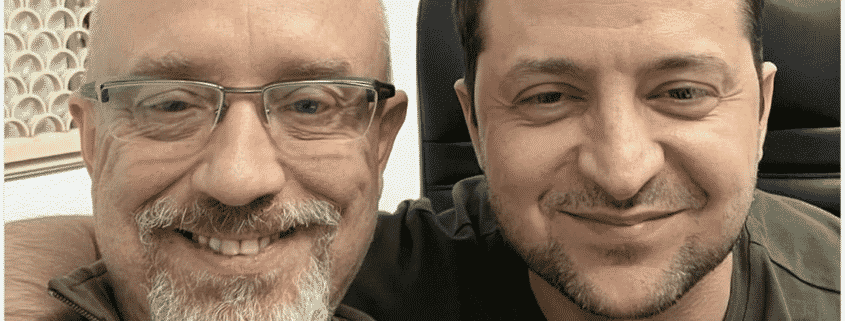
Volodymyr Zelensky is the man of the moment and reams of video and comment are hitting the internet, analysing his chances of survival and his effect on history.

As all readers of this blog know, we look for the communications lessons in current affairs and Zelensky is giving us all a text book illustration of not just leadership, but the use of modern communications skills. He uses not just words but mobile phone video to mobilise and galvanise his country.

The short self-shot videos from the President’s own phone are likely to become part of the way leaders communicate in the future. Zelensky used them last week to dispel rumours that Ukraine’s leaders had fled the country.

One shows him in front of a known landmark, openly walking the streets of Kyiv, despite the death threats against him.

In this next video – very short, filmed on his phone at night – he shows five of the country’s leadership, naming each one, and saying: “Everyone is here.”


In both cases, simple, unsophisticated and yet so powerful. Note the very short sentences such as ‘Everyone is here’. And lots of repetition.

These simple often very short, adlibbed messages are in stark contrast to Russian President Putin’s set piece addresses. Putin is professionally filmed, flanked by the uniformed and decorated officers of the Russian military and often speaks for more than an hour.

The Zelensky style is clearly resonating with his countrymen and women. It is also perfect for western audiences including the young. And the style is much more likely to appeal to those younger Russians who, it is said, are busy sharing alternative material on the war in contrast to that put out by the state-controlled media.

Even Zelensky’s more formal addresses are short and stunning in their simplicity. The President has repeatedly appeared behind a podium in olive green clothes that could be combat wear although there are absolutely no medals or military paraphernalia in sight. The sub text is – I am one of you. This is not about my position and the trappings of state. It’s about the fight at hand.


There have also been some inspired and history-making quotes. Offered ‘extraction’ by the American military, Zelensky said:

“I don’t need a ride. I need more ammunition.”

Later, in a longer address,  he explained that Ukrainians will defend themselves:

“By attacking us you will see our faces. Not our backs, our faces.” In this speech he is directly addressing the people of Russia and he does wear a shirt and tie, and has a picture and the Ukrainian flag. A different staging for a different audience.


This whole speech is in my view brilliant on a technical level as well as historically, chillingly important, from a man with a target on his back.

Short sentences. Lots of personal anecdote. Simple language.

The former actor, former comedian, former sit-com President, is using the skills of that trade to shape Europe’s history. As my own brother put it to me: whatever happens to him he has, in some ways, already won. He will never be forgotten.

The most powerful element of any message….

When my parents married they were dirt poor.  My father had walked away from a life in the steel mill in South Wales and wanted to be a journalist.  Living in a rented flat with two young girls in the early sixties, every penny was counted. He taught himself Pitman’s shorthand – a skill now almost extinct. After a badly paid spell as a reporter on the Oxford Mail he got an exciting new job as a Press Association journalist, in the lobby. For a poor lad from the backstreets of Cardiff, it was a big break. But he had no suits! Nothing he could wear in the Palace of Westminster. Mum’s father gave him some cast-offs but he was a much shorter rounder man than my Dad. Mum altered those suits and sewed turn-ups on the bottom, something that at the time was definitely not in fashion. But they did the job for a while. And my father went on to become a BBC reporter and presenter.

My parents’ struggle to get ahead, to have a professional and intellectual life rather than working in a factory is one of the stories that, 60 years later, still influences me. I feel so lucky to have interesting work.

Message

And everyone has those stories. Stories of where they’ve come from or moments that defined the rest of their lives. All businesses have those stories too. They are too rarely told.

Most courses I run these days are just two or four hours, and very intense. Senior time-poor people who need to get ready for a media interview, a town hall or a presentation. There is no time to go digging for story gold.

But just occasionally we are booked for longer courses with the luxury of time to really help our clients glimpse the world through our lens.

Persuading people to tell stories as part of their professional communications is hard work. Sometimes, they can’t quite see the point.

However, when we create the safe space and the time to get a group of people to share a story, lots of magic happens. People connect with each other more and enjoy the experience.

But more importantly, we can demonstrate the power of stories: how they shift people’s perspective, how they touch something other than the analytical brain and yet still influence it.

It is not just stories about where leaders have come from. I remember helping with messaging to launch a ‘pick and mix’ home insurance product: all very dry until we dug out the story of a letter from an elderly customer. ‘My husband and I are in our eighties’ she wrote ‘our cycling days are long behind us so why am I paying to insure 2 bicycles as part of my home insurance.’ That letter had – in part – inspired the new product.

Many years ago, I worked on messaging a new pension product inspired by a CEO who said: ‘I watched my grandmother outlive her pension’. I remember that man saying to the room ‘but is that really interesting?’ Everyone shouted emphatically ‘yes’.

And the story of the Reverend Henry Duncan who founded the world’s first mutual savings bank in 1810 in Dumfriesshire, as a way of helping his parishioners manage poverty, is an inspiring story retold many times. The bank went on to become TSB and the Henry Duncan story is a pillar of that brand.

If your business is looking to talk about purpose, the hunt should be on to find stories to communicate that.

Learning to find, chose and create stories to use professionally, is simply about creating awareness.  To use an analogy: If you not interested in nature, a bird in the garden is just a bird. But, once you stop to look, it is clearly a busy solitary blackbird or part of a gang of noisy sparrows. You just need to look.

If your job is to explain or lead with purpose look more. Tell more stories!

How to Speak Human…

‘Things could go crazy quickly.’

‘That’s a world war when Americans and Russians start shooting at each other.’

speak human

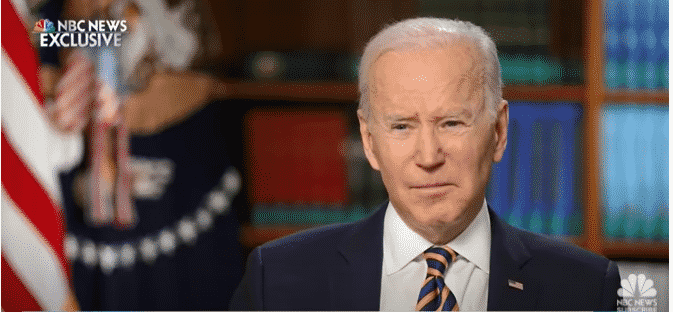
If you want people to listen and take note of what you say, keep it really, really simple. President Biden wants Americans to leave Ukraine, and leave now. So, he chooses very compelling language. The Guardian pulls out the key clips for us here.

‘Go crazy’ or ‘shooting at each other’ are the sort of phrases most business leaders would strike out of a speech, substituting more cautious or sophisticated language.

But if your audience is the man and woman in the street, or perhaps your staff, they will take a lot more notice if you use simple, colloquial language.

Sounds obvious huh!

Obvious but not so easy in my experience. It’s probably one of the things professional people find the most difficult when learning to be a spokesperson or give a professional speech.

And just to add one basic point often missed: written English and spoken English tend to be different, so even if you are writing a speech or the script for your podcast, you want to write to be heard, not to be read. We teach this in all our training and is a central feature of my colleague Eric Dixon’s ‘podcast training’.

Here are five tips to ensure you find the right vocabulary:

Imagine someone you know

Putting a real person front of mind and noting the words you would use to speak to them, can really help. I often ask people to speak to their Mum, or their son or their son’s best friend. I find people often automatically find different words and better explanations.

Use the short word

Utilize should always be use.

‘Procure’ or ‘purchase’ should be replaced by buy.

‘Remuneration’ can be replaced by ‘pay’ or ‘pay package’, (or ‘pay and benefits’ if you must).

‘Adhere’ is not something you would say at home. You would say ‘stick’.

‘Accordingly’ can usually be shortened to ‘so’.

Don’t be afraid to use several words rather than one long one

Beneficiaries’ might become ‘the people we help’ or ‘serve’.

‘Products’ is best explained as ‘our face creams’, ‘bank accounts’, ‘loans’ and so on.

‘Access to services’ is a phrase whose meaning is often completely lost. Try ‘installing ramps and widening                     doors’ or ‘ensuring people can use the phone, get cash out, etc.’

Have a back pocket phrase

Some phrases you may want to use but need a neat explanation to hand just to help those who are not familiar. For example:

Quantitative easing – a form of printing money.

Reduced footfall – fewer people walking past, less often.

Burrito method – sew inside out, like a burrito.

Try it out on someone else

Spotting the jargon or group-speak of other professions is easy, it’s much harder to work out which of the words you use every day are not fully understood by others. Fortunately, you just need to ask. You can ask colleagues, but it is even better to ask someone not as familiar with your professional world.

The one question I always get…

Aren’t you patronising your audience?

I can only say that I think shrouding the meaning of something in language that only those ‘in the club’ understand, is much more of an insult than over-explaining. If you carefully consider who is in the audience, you will almost certainly pitch your language at the right level. But if you do over-explain here and there, is anyone really going to leave the room feeling ‘patronised’.

Need help with all this? You could book a short online training session with one of our team. To reach us, click  here.


Biden Image from YouTube


bank of england governor gaffee feature

What the Bank of England Governor got so very wrong

If you are going to be the public face of an organisation you need to understand how normal people will react to your words.

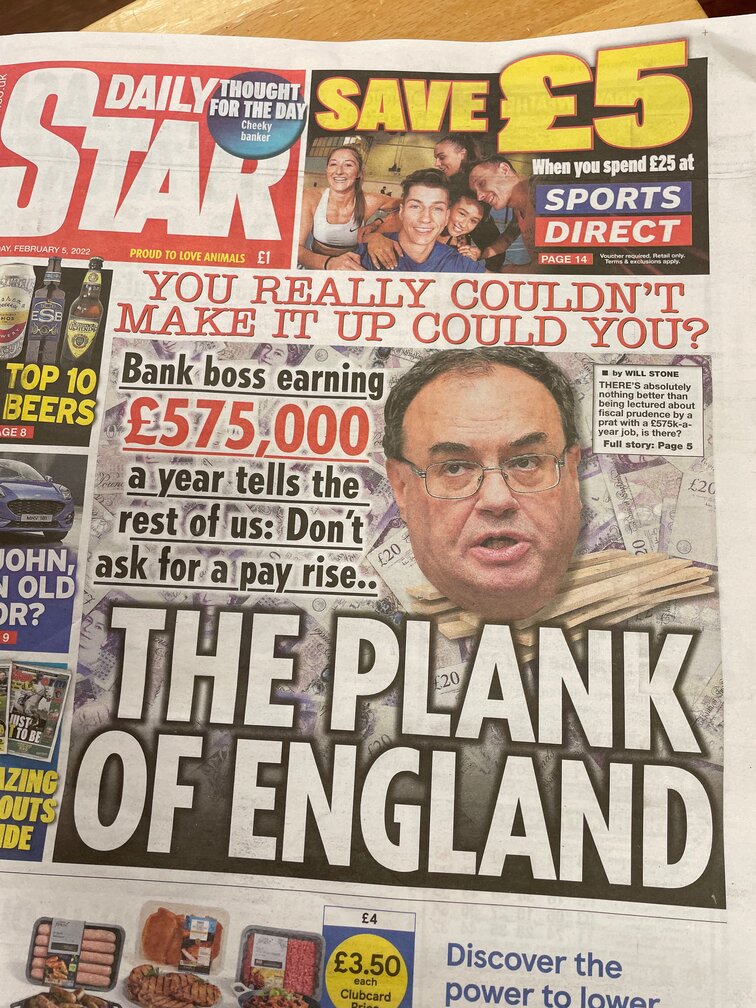
Bank of England Governor, Andrew Bailey, got it badly wrong last week when he called for workers to moderate their wage demands. A call that predictably and reasonably caused outcry and fury. Twitter and the airwaves exploded with venom: yet again the man in the street was being asked to ‘pay for’ some economic crisis.

It is clearly unacceptable to have rich people asking poor people to tighten their belts. Surely most people in public life would recognise that.

bank of england governor gaffee picIn fact, telling other people or groups how to behave, comes pretty high on my list of stupid headline-worthy things to say. Unless you actually plan to kick a hornet’s nest, seek to persuade rather than demand. At least in public.
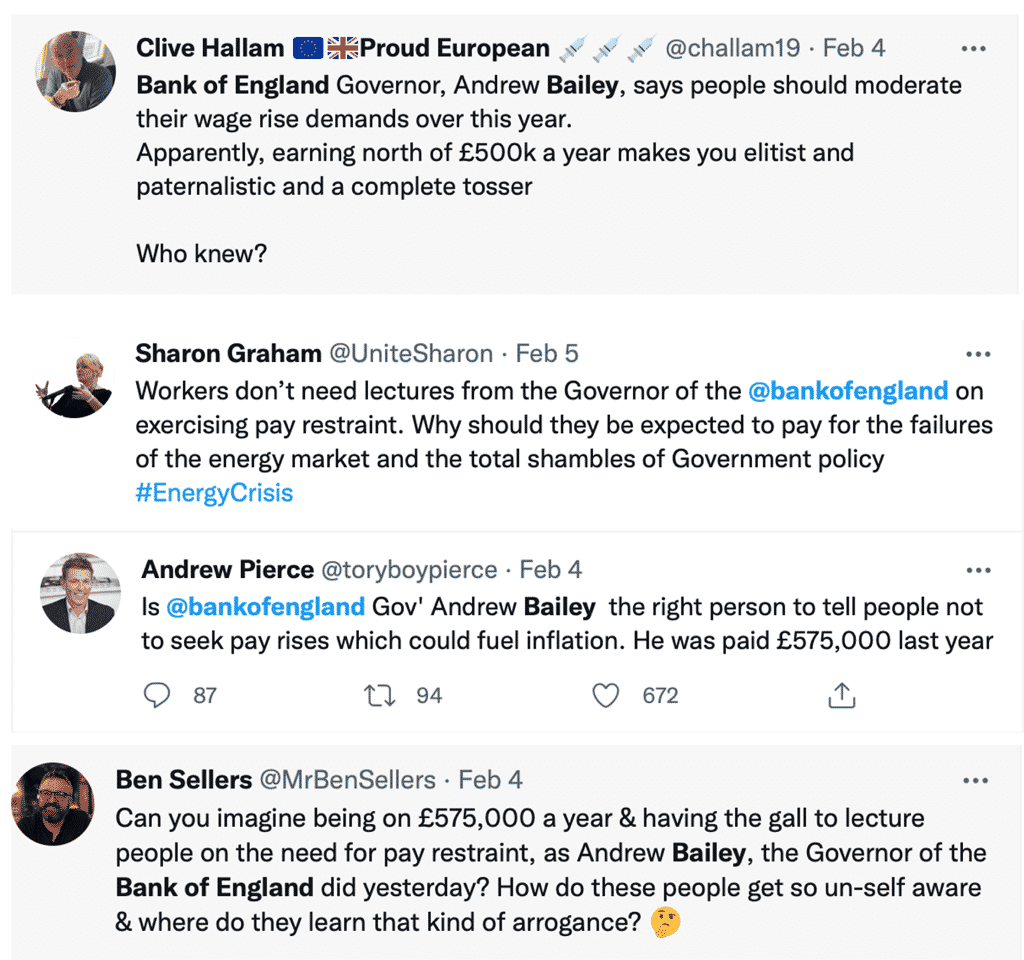

It is easy to dismiss this as ‘tomorrow’s chip paper’, as we used to say when news reached us via newspapers. But in my view, this is hugely damaging for Bailey, for the Bank of England and for the political establishment.

Millions of people are watching food prices rise and are seriously frightened by the jump in the cost of gas and electricity.  Bailey’s remarks are just more evidence that the ‘toffs’ that run the country are out of touch.

How could Bailey have got this so badly wrong?

Watching the interview through the Media Coach lens, anyone trained by us would spot it straight away: the Governor was just answering a question. It was a seasoned and ambitious journalist, BBC Economics Editor Faisal Islam, picking up a thread and asking the interviewee to fully articulate or agree with something that so far had only been hinted at.

Islam’s question: “Are you trying to get into people’s heads and ask them not to ask for too high pay rises?”

Bailey’s answer: “Broadly yes… in the sense of saying … we do need to see a moderation of wage rises. Now that’s painful.”

It’s clear that Bailey is trying to soften the blow here, but the words are out. A much safer answer might be:

“No but as policymakers we need to find ways to squeeze inflation out of the system again.”

Just to be clear, Central Banks are supposed to worry about inflation, and wage inflation is particularly damaging to financial stability. Every economist will know why Bailey would have been motivated to say what he did.

In the privacy of the high-ceilinged, panelled meeting rooms of the Bank of England there have probably been many discussions about how to keep wage inflation from getting out of hand.

However, no one would have advised a high-profile press conference to announce the public should moderate their wage demands. The fact that the idea comes in response to a journalists question, makes it no more acceptable.

Bank of England Governor Gaffee twitter.

By the way, if you watch the clip you can clearly see Faisal Islam is genuinely surprised that the Governor could say such a thing and realises – in that moment – that he just got a scoop.

Casual listeners to current affairs programmes would be astonished to know the huge amounts of work that normally go into avoiding this sort of gaffe. Key statements are planned, and predictable questions have carefully prepared answers. Very few people are experienced enough in public life to instinctively avoid this sort of landmine.  Most need the help of others to consider the implications, risk assess both statements and reactive lines.

Every PR person’s nightmare is the leader who is used to being the smartest person in the room, who thinks dealing with the media is something any intelligent person can do without preparation or training, and who thinks PR advice is for the numptys.

Tom Swarbrick feature in media interviews

In media interviews, when you don’t want to be drawn, don’t draw!

Interviewers often receive a lot of stick about using unfair amounts of pressure to force interviewees to reveal something they are trying to keep secret. In other words, to ‘draw’ something from them, when they are quite clearly trying not to be ‘drawn’.

Sometimes this criticism is justified.

But occasionally, interviewees themselves provide the impetus for such an approach, leaving the interviewer with little choice but to pursue them.

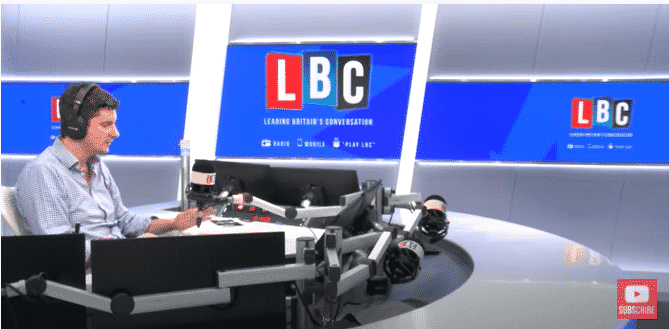
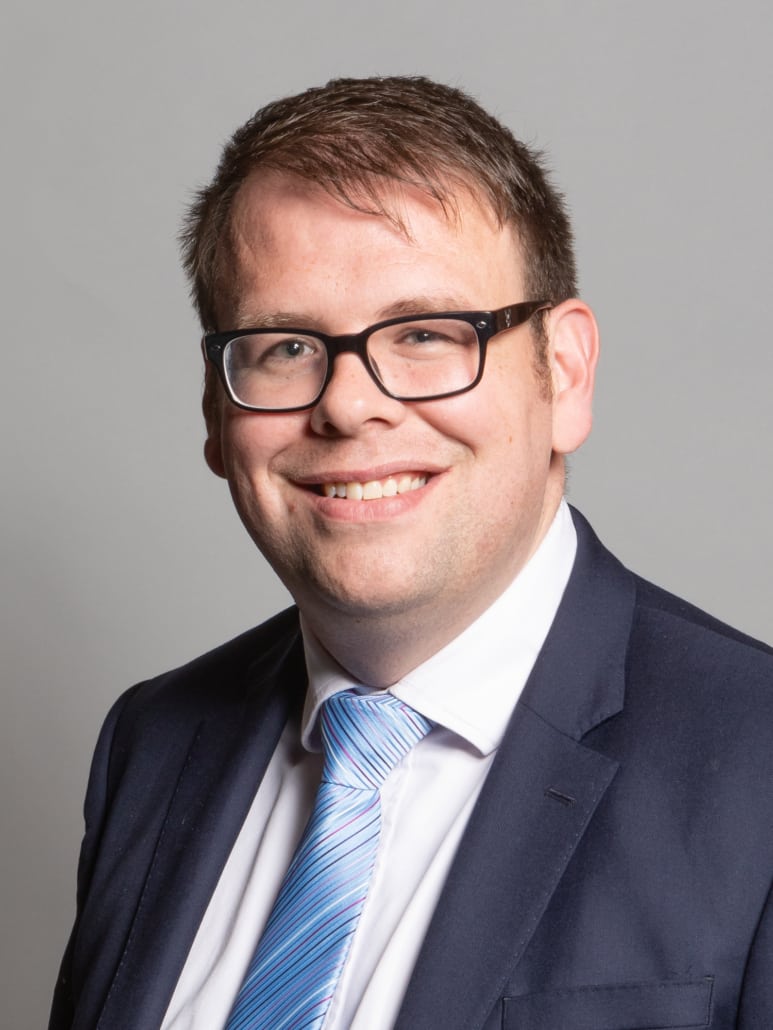
What follows is an unedited transcript of a two-and-a-half-minute extract from a recent live interview on LBC radio. Night-time host Tom Swarbrick was interviewing the Conservative MP for Bolsover, Mark Fletcher.

in media interviews Tom Swarbrick

Tom Swarbrick

Swarbrick started by asking a general question about the two dramatic events in the House of Commons that day: the call from David Davis for the Prime Minister to ‘go’ and Mark Fletcher’s friend and former fellow Conservative MP Christian Wakeford crossing the floor to sit on the Labour benches. Fletcher’s response:

Mark Fletcher MP in media interviews

Mark Fletcher MP

MF: “Well, I find it very difficult to talk about Christian Wakeford – he’s a good friend of mine. And I know he’s been in a very difficult place personally and professionally for some time…”

That response, early on in the interview, was a classic example of the problem. If Fletcher had stopped after the first sentence and stuck to his guns, all would have been well. But his second sentence positively encourages further enquiry – which is precisely what happened:

TS: “What do you mean by that, ‘he’s been in a difficult place personally and professionally’?”

MF: “Well – I don’t want to reveal everything about our friendship – but, you know, he’s had a difficult time. And I’m not necessarily sure that this is the decision that the Christian Wakeford who was elected in the first place would make, and I think, you know, he will come to regret it.  And I feel very sorry for him on that basis.”

For Swarbrick, this was clearly a rich vein to tap. Not only was there more to ‘reveal’ (Fletcher’s own word), several gems of information had already been extracted, including the fact that Fletcher believes his friend is not the same man elected in 2019:

Christian Wakeford MP in media interviews

Christian Wakeford MP

TS: “So, you’re suggesting that he’s changed somehow, since he was elected, to now.”

MF: “Yes.”

TS: “What’s changed him?”

MF: “Well, again, I don’t want to reveal anything that isn’t in the public domain, but I think, um, he has found many things, er, quite difficult, and…”

There’s a pattern here: the emergence of various tempting snippets of information (which often prompt more questions than answers), followed by a swift refusal to go further. Unusually, on this occasion, the interviewer explicitly points this out to his guest:

TS: “But I’m not sure Mr Fletcher this is a good idea to give a ‘nod-nod, wink-wink’ about someone’s personal behaviour or personal life, as being the motivation for them making a decision that you don’t agree with, without telling us what the problem is.”

MF: “No, no – that’s absolutely not my intention. My intention is to say that I am struggling between feeling betrayal from a friend and anger towards that friend, but also feeling, um, that perhaps I haven’t been a good enough friend over the past few months. And, you know, and it is a matter of personal regret to me that if I had been a better friend, perhaps he wouldn’t have done what he did today.”

Wow. This is powerful stuff, which in itself prompts the following – perfectly fair – line of enquiry:

TS: “In what way could you have been a better friend to help him?”

MF: “So, I think that he needed more support. Um, and I think he needed help through a difficult period of time, and, um, I wish we could have done more to keep him where he started.”

TS: “I still don’t quite understand what was difficult for him that perhaps hasn’t been difficult for you or, as of yet, any other of your colleagues who were elected in 2019?”

MF: “Obviously, we have faced some of the same pressures in regards to the pandemic and in regards to things that have happened in society – but I also think that Christian has been in a place in which, um, you know, he has struggled with a few things, and er…”

It’s time for the ‘teasing’ to come to an end. The ‘difficult’ nature of Wakeford’s situation has been mentioned several times. Plus there are his personal and professional ‘struggles’, as well as his need for ‘support’. So Swarbrick’s next question is almost inevitable:

TS: “Are you alluding to his mental health?”

MF: “I am not alluding to anything.”

TS:  “Well, you must be alluding to something!”

MF: “I will not be drawn on that.”

TS: “But you drew it!”

Tom Swarbrick is right. As an interviewee, you are, of course, perfectly entitled to withhold any information or opinions that you wish. That is your choice, and no interviewer has a ‘right’ to extract them from you.

But what you cannot do – or at least cannot fairly expect – is to ‘tease’ your interviewer or ‘allude’ to something you could say (what Swarbrick describes as a ‘nod-nod, wink-wink’ approach) and then staunchly refuse to talk about it.

It’s not fair to you, it’s not fair to your interviewer, and it can end up revealing far more about the subject you are trying to keep under wraps than you had ever intended.

Images:
Tom Swarbrick – YouTube
Mark Fletcher MP – Wikipedia
Christian Wakeford MP – Wikipedia

Pork Pie Plot feature

Pork Pie Plot and Other Matters

The news can be dull, repetitive, and tedious despite the best efforts of journalists.

But creating or just reporting the witticisms that come naturally from some people, really does make it all a lot more fun.

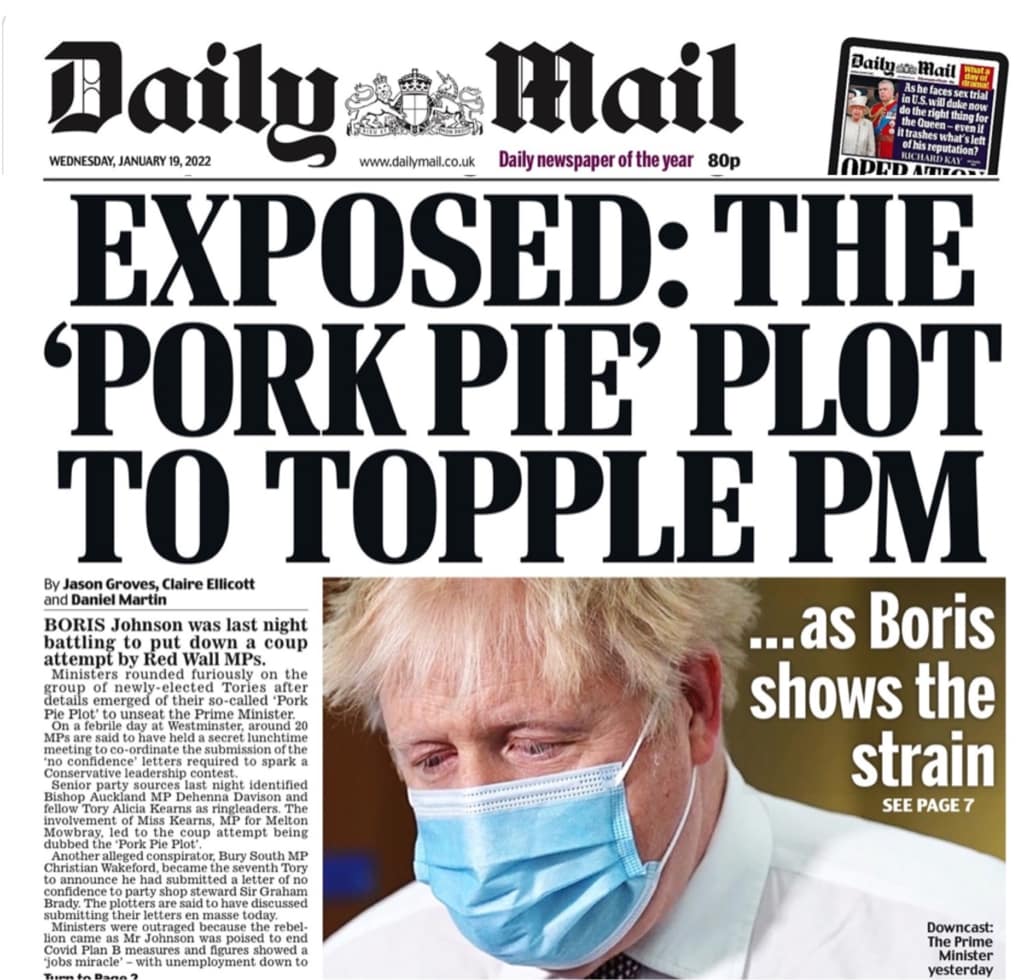
Pork Pie Plot

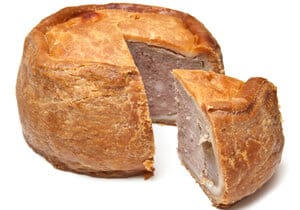
I just loved the Pork Pie Plot so-called because one of the alleged political plotters comes from Melton Mowbray. This is how CNN is reporting it to the world:

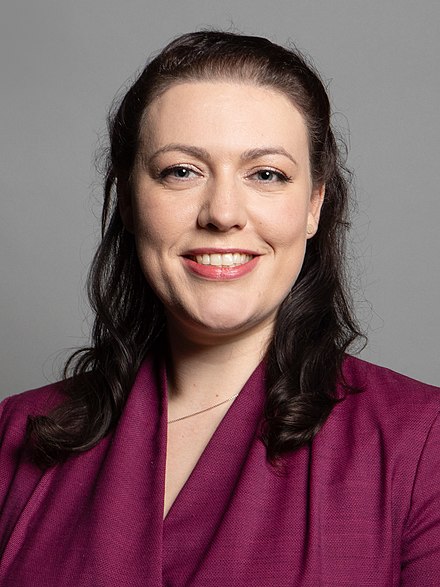
The British press is rife with speculation that the MP for Rutland & Melton, Alicia Kearns, hosted a meeting of discontented Conservative backbenchers this week. That constituency is home to the famous Melton Mowbray pork pie.

Pork Pie Plot

Rutland & Melton MP Alicia Kearns

I don’t know who first came up with the name, but it spread like wildfire. And that is the thing to take note of. A good name, a light-hearted name, encourages everyone to use it – including journalists who are looking to inject fun into the news.

There were a couple of other great metaphors in UK politics in the last few days. The idea that the Conservative leadership would give the Tory right some ’red meat’ to keep them happy, also got a lot of traction. In this case, ‘red meat’ referred to policies like ending the BBC licence fee and calling in the military to end illegal channel crossings by migrants. Here is a nice explanation from the I newspaper.

A few days earlier Keir Starmer used the phrase ‘industrial-scale partying’.

And in the metaphor-news this week, we hear that Professor Jonathan Van-Tam (dubbed JVT) – knighted for his work in the pandemic – is stepping down from his role as Deputy Chief Medical Officer and going back to academia. JVT is on the record as saying he loves a metaphor. There is a good piece from the Evening Standard which pulls together some of his best.

But it is naming that always fascinates me.  Again, I have blogged about this before, in 2015 in fact, when I observed that a dentist from Minnesota who mistakenly shot a protected lion whilst on safari, was very unlucky to the extent that the lion was named Cecil.  Had the lion had been called Dhahabu (Swahili for gold) or just had a number, there would have been a lot less publicity. The name Cecil was enough to ensure the dead lion was reported around the world.

‘Pork Pie Plot’ is inspired and will probably make it into pub quizzes and books of political ephemera. It will also be associated with Alicia Kearns all her political career.

And yet businesses I work with are always so reluctant to give new products and services interesting names. Or even interesting nicknames. If you call your new portal ‘Babs’ or ‘Shirley’ or name a high-tech vehicle ‘the Batmobile’ people will talk about it more. Journalists will write about it more. The actual logic behind the name can be very tenuous (as in the Pork Pie Plot) but if the name is fun …it will work.

And surely, after the last two years, fun is something we all need.

pyramid communication

Pyramid Communication, a brief introduction

My boss has the attention span of a gnat…how do I get her attention?

I’ve been told I need to communicate better…how do I do that?

I lose the meeting as soon as I start speaking – what am I doing wrong?

I think I am boring people on video calls…but don’t know how to be more interesting.

Pyramid Communication, Personal Impact Training

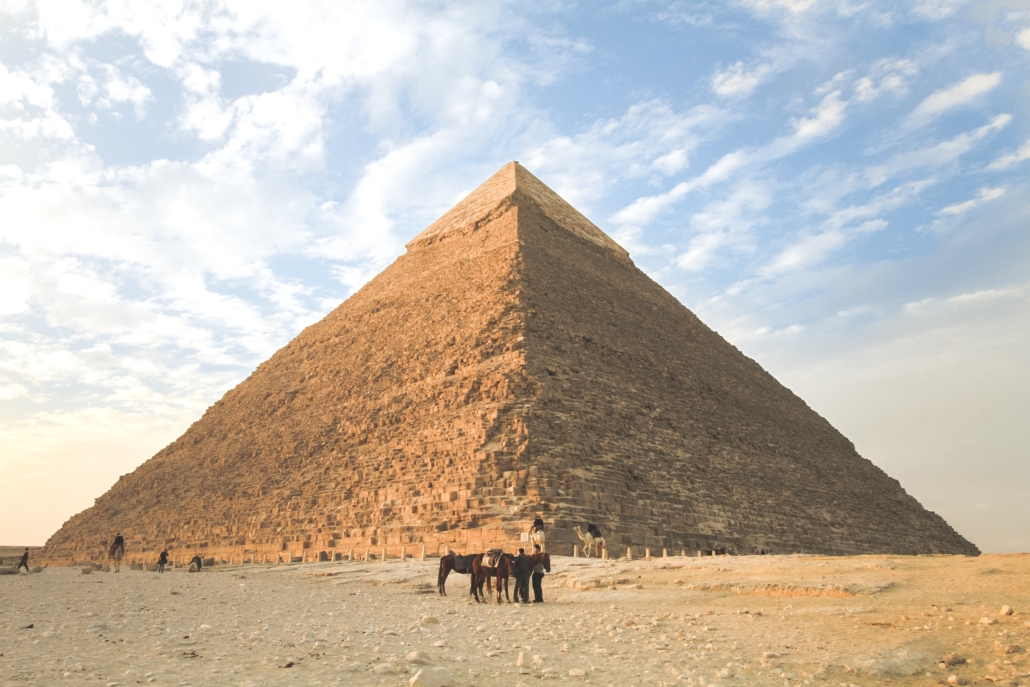
Photo Jeremy Bishop Unsplash

Pyramid communication – a technique that has been around since the 1980s – may help with all the above issues.

They are all problems we’ve heard from clients who have taken the first step to think about how they can communicate better…and then got in touch with us to help them.

The concerns presented in our Personal Impact Training sessions are diverse, but there are some quick tips that will help anyone communicate more effectively. Some we have mentioned before: slow down, use a pause, keep the language simple, use examples, etc.

[You might ask – who are we to be experts in this? Well aside from 20+ years coaching ambitious professionals at all levels of business, almost all my team were trained as broadcast journalists. And although you won’t find it in any job description, one of the basic rules of being on air is ‘you must be clear, and you can’t be boring’. So, we have all been trained. Trained by the BBC, by SkyTV, by ITN, in ways to communicate that are accurate, clear, and engaging.]

So while there are lots of elements we can bring in here, let’s concentrate on one quick win: Use pyramid communication.

What is that you might ask: simply put, it means to deliver the conclusion first and then explain. Not the other way round. In journalistic terms, this translates as ‘give them a headline’.

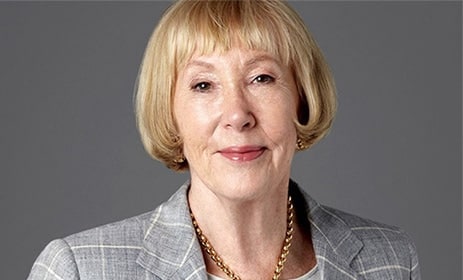
Pyramid communication was developed by Barbara Minto for the consultants McKinsey.

Pyramid Communication

Barbara Minto, McKinsey Alumni Centre

Over the years Minto elaborated on the basic principles and added many layers, applying them mostly to writing. You can buy books or attend courses on how to apply this principle.  I tend to use the simplest most basic principle only because I am usually dealing only with spoken communication.

This is how Minto explains this first basic principle.

“Controlling the sequence in which you present your ideas is the single most important act necessary to clear writing (and communication). The clearest sequence is always to give the summarizing idea before you give the individual ideas being summarized. I cannot emphasize this point too much.”

But how do you do that in a conversation or a business meeting?  

First, rid yourself of the habit of thinking aloud. Don’t start talking while you work out the answer. Pause, consider, and then give a clear summary, action point, or answer.

I recently tried a very simple exercise with someone who wanted to learn this way of thinking and communicating.  I asked her to tell me about her day so far. With her permission, I recorded the answer.

The first recording was over 4 minutes long. She started with the time she got up, some details about her children getting to school, a troubleshooting meeting on Zoom with a client in Moscow, and then a rather tedious meeting about how to deal with a long interview with a regulator, later in the week. Because she was thinking as she spoke, there were hesitations and false starts.  When I played it back she was mortified!  She commented without prompting: ‘It’s so boring… I get really irritated when my staff speak like this.’

We immediately did the same exercise again but this time I asked her to just give me the headline followed by a small amount of important detail.

This time she said ‘I saved the relationship with the Moscow client in 40 minutes and then had to prepare for a call with the regulator.’ The recording was less than 10 seconds long.

Curating information before you start speaking…and doing it in just a second or so is not difficult. It is more a way of thinking or a habit.

If you want to get ahead in business, learn to respond to questions using pyramid-style answers.

  • Pause (and think)
  • Give a headline (the tip of the pyramid)
  • Give a small amount of detail
  • Provide more detail in response to follow-up questions

For those of you who have been trained by us to use Message Houses – a Message House is a series of three pyramids, within one big pyramid. Each message has a headline – usually quotable – followed by carefully planned supporting evidence. This supporting evidence is layered so you can add to it or leave it out, depending on the interest of your audience or questioner. A simple but powerful idea that has stood the test of time.

If you want help to become a better communicator. Book a few short sessions with a Media Coach trainer. Email enquiries@themediacoach.co.uk or phone +44 (0)20 7099 2212.


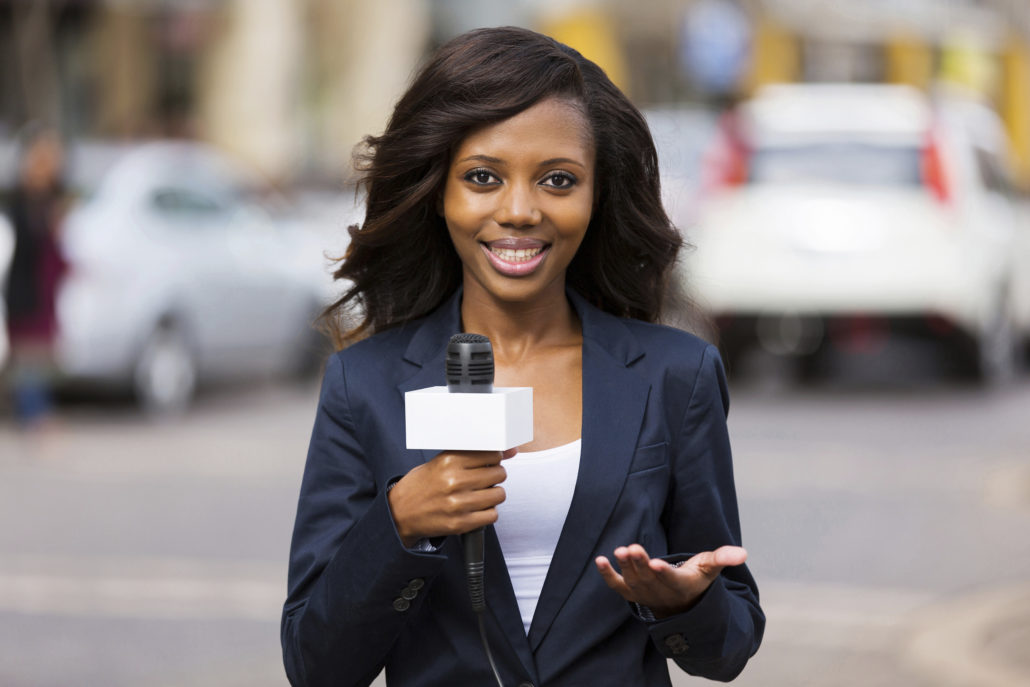
How to Dress for TV- Our Top Tips Image

How to Dress for TV: Our Top Tips

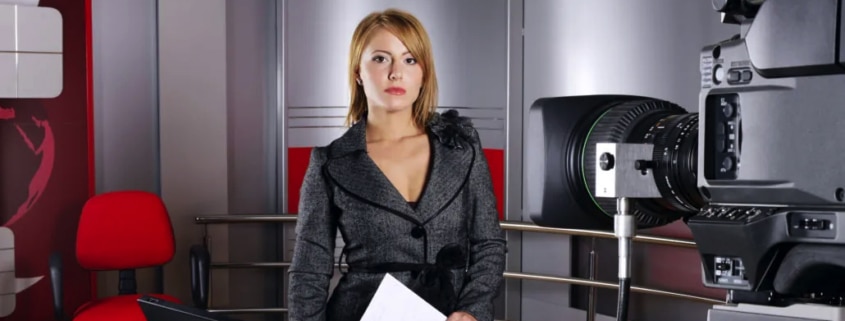
How should I dress for TV? is a question we are regularly asked, so this week we are repeating one of our best performing posts of all time.

As media trainers, we think what you are wearing is one of the least important things to worry about if you are doing a TV interview. But we aim to provide the information our clients want. So here are our ‘how to dress for TV top tips’. [This post is dealing with advice for women but we have also posted advice for men, which can be found here.]

how to dress for TV image

Any sort of jacket is a good idea on TV, partly because it gives somewhere easy to attach the microphone.

How to Dress for TV: Normal Business Wear

  • As an overarching principle, start with ‘normal business wear’. We are not talking here about dressing as a TV presenter or as a celebrity (they do not need our advice). But if you are being interviewed as a representative of an organisation wear something that would be appropriate if you were going into the office.  This will clearly be different if you work for a tech company where jeans and a black polo may be the norm, compared to running a bank where you will be suited and booted every day. If you work for an NGO you will likely wear different clothes than someone running a funky design company. Whatever you would wear for work will probably work if you are being interviewed on TV.
  • Women need make-up. I remember seriously offending someone from a very politically correct NGO by saying this but I stick to my view: it is a bad idea to go in front of the camera without make-up. Firstly, it is important to understand that TV lights are harsh and will be unflattering. Secondly, almost every other woman on the programme will be wearing lots of make-up and you will look odd if you don’t. Clearly, there are exceptions; if you are reporting on saving lives in a war zone there are more important things to worry about. Orla Guerin MBE is a BBC journalist who reports regularly from the Middle East and is a legend in her own lunchtime. I don’t know for a fact that she never wears make-up but it certainly doesn’t look as if she does. But I totally make allowances as a viewer as she is usually wearing a flak jacket and interviewing distraught relatives of recent victims of some atrocity or other – and absolutely clearly has other things to worry about. But if she was in the studio doing an interview I am sure she would wear make-up and so should you.
  • This does beg the question what sort of make-up? My topline advice is a good foundation and take steps to make your eyes stand out. Use blusher if you need it and normally wear it while lipstick is optional.
how to dress for TV image

The safe wardrobe option for an interviewee is jacket and t-shirt, it is the outfit most often chosen by female television presenters.

How to Dress for TV: Jacket and T-shirt

  • For most of our clients, the ‘safe’ outfit for a woman interviewee is a jacket and T-shirt or jacket and shift dress. The T-shirt should not be too low on the neckline – any cleavage is distracting so you may choose to avoid showing it. Similarly not too high on the neckline: polo necks are very rarely seen on TV for good reason. They are too hot for a studio environment. Most female newsreaders stick to the jacket and T-shirt formula and it is a very safe one.
  • Having a jacket also gives somewhere to clip on the microphone and saves any embarrassing need for wires up under a dress or pulling a delicate top out of shape.
how to dress for TV image

Avoid scarves and overly large jewellery: simple lines are the least distracting.

How to Dress for TV: Avoid Scarves

  • Avoid scarves and overly large jewellery. I would advise trying to keep a clean ‘unfussy’ image and amazing jewellery will again only distract from your message. Dangly earrings are to be avoided as they will move and again distract from what you are saying.
  • The vast majority of TV interviewees are shot from the midriff upwards, something that is called a mid-shot. However, unless you absolutely know that is how the interview will be shot you may want to give some thought to the bottom half! Crucially, if there is even a remote possibility that you are going to be on a low settee – do not wear a short skirt. If you do you will surely spend the whole interview tugging at the hem at and worse being distracted by the amount of leg on show.
how to dress for TV image

Jackets can be worn with a shift dress but if it’s too short you might be worried about showing too much leg.

How to Dress for TV: What Colour?

  • People often ask ‘what colours can I or should I wear?’ The truth is it makes very little difference these days so long as you don’t wear checks. 20 years ago camera technology struggled to cope with black, white, bright red etc. Today, black and white are best avoided if possible but only because they can be unflattering in harsh light. Softer colours are more flattering. However, one important rule remains; don’t wear high contrast checks. If you do the picture will ‘strobe’ making it look as though you have recently been standing in a nuclear bunker. While this is not a crime, it is distracting.
  • Hair off the face. If you have long hair consider tying it back. Viewers need to see both your eyes to trust you. Also, there is nothing more irritating than someone constantly flicking their hair back off their face.
  • Finally, where you look during the interview is much more important than what you wear. Hold the eye line with the interviewer as much as possible unless you are doing a ‘down the line’ in which case you will need to stare down the lens of the camera.
how to dress for tv image

TV lighting means it is a good idea to wear make-up if you are being filmed.

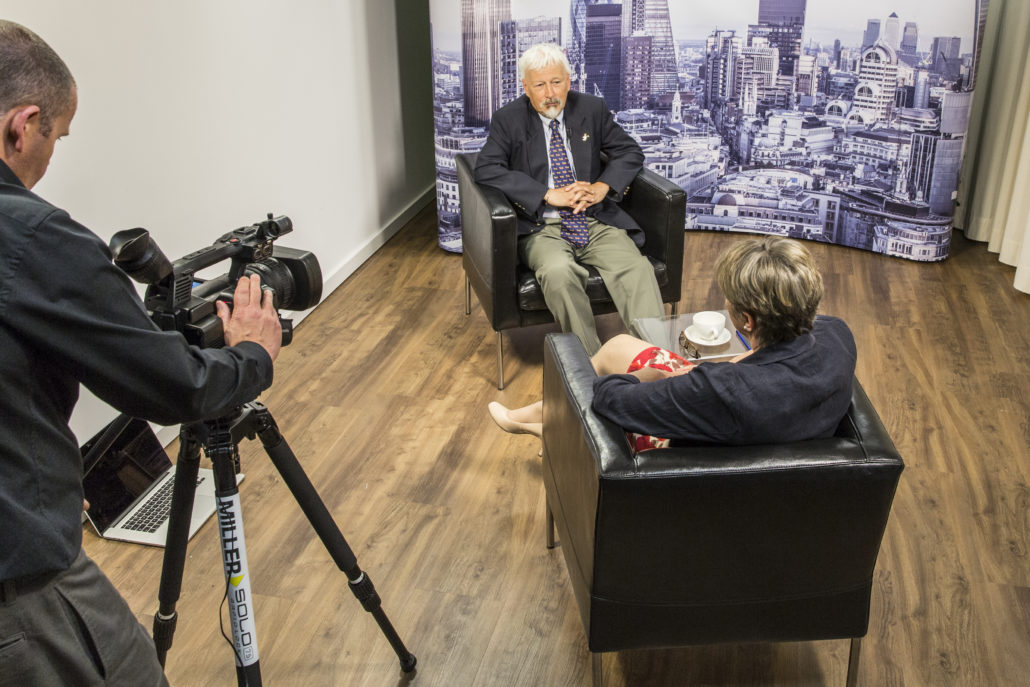
If you want to prepare for a television or radio interview why not book a session with us in a studio. We can provide a realistic run-through and you can watch and critique your own performance as well as enjoying expert coaching. That all means you are much more likely to get it right on the day.

Other Articles

We have posted in the past about the importance of how to sit and stand on TV – you can read this post here.

But don’t just take our word for it, here is another article about what to wear on TV.


Mitch

10 tips: what to wear on TV

What to wear on TV: is a question we are asked all the time.

Back in November I wrote ten top tips for women and promised we would also provide ten top tips for men. Just to reiterate: as media trainers, we think what you are wearing is one of the least important things to worry about if you are doing a TV interview. But we aim to provide the information our clients want. So here goes.

what to wear on TV

Normal business wear is a good principle to follow when being interviewed on TV

What to wear on TV: normal business wear

  • As with women, the overarching principle for professional people being interviewed on television is ‘normal business wear’. If you work for an NGO you will likely wear different clothes than someone running a funky design company. Whatever you would wear for work will probably work if you are being interviewed on TV.
  • Even men sometimes need make-up. We do understand that most red-blooded men baulk at the idea of wearing make-up but if it’s offered by a TV station we suggest you don’t turn it down. Many man have what we might diplomatically call a very high hairline. This can present a problem for the cameraman: a shiny pate will bounce light like a mirror and be very distracting.
  • Glasses on or off? The truth is it probably doesn’t matter. But it is not a good idea to take your glasses off just before an interview as you are likely to have an indent on the bridge of your nose which again, can be distracting. It is true that if you wear glasses on camera you can find studio or camera lighting is bouncing off the lenses and obscuring your eyes. However, this is the camera operators problem, not yours and they can easily adjust the shot to avoid the problem.

What to wear on TV: jacket and t-shirt

  • For most of our clients, we would suggest men wear their jackets on camera. Ties are optional and really depend on the culture of the organisation you are representing. As with women, the jacket not only looks smart, covers any embarrassing underarm sweat marks but also gives the technicians somewhere to put the microphone.
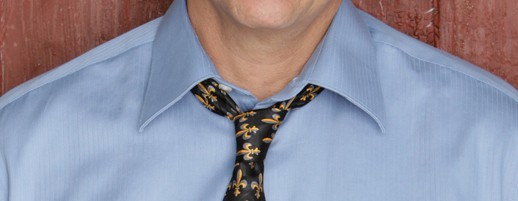
  • If you do wear a tie please, please check the knot is right at the top before the interview begins. Also, ensure the tie is hanging straight. Small misalignments can make a big difference to the image and it is easy to give the impression that you are overly informal or don’t care.
what to wear on TV

A small misalignment in your tie can quickly leave the wrong impression

What to wear on TV: think of your socks

  • Give some thought to your socks! The vast majority of interviews are filmed as a ‘mid-shot’ which is the waist upwards or slightly higher. The problem is you may not know what the studio set is like and what shot they are planning to use. It is not something interviewees can have any influence over. If they put you on a low settee (think BBC Breakfast News) there is every chance your legs and socks will be in shot some of the time. If they are brightly coloured or worse too short you are again providing a big distraction to what you are saying. Three inches of hairy leg between sock and trouser bottom will be the main preoccupation of a third of your audience. I am aware that Jon Snow has been wearing highly coloured hugely distracting socks for a very long time but it is part of his brand and he is on our screens most nights which means there is no novelty value.

What to wear on TV: what colour?

  • People often ask ‘what colours can I or should I wear? The truth is it makes very little difference these days so long as you don’t wear checks. 20 years ago camera technology struggled to cope with black, white, bright red etc. Today, black and white are best avoided if possible but only because they can be unflattering in harsh light. Softer colours are more flattering. Pink and blue shirts are considered preferable to white but again it is marginal. However, as with women, one important rule remains; don’t wear high contrast checks. If you do the picture will ‘strobe’ making it look as though you have recently been standing in a nuclear bunker. While this is not a crime, it is distracting.
  • Check your hair. For women the most common problem is long hair falling across their eyes and either being distracting or being constantly flicked away which is also distracting. For men, this is less of a problem but the early morning cow’s lick is very common. It is often right on the crown of the head and not instantly seen when looking in the mirror but will show when you move your head around while speaking. It is not a crime but not ideal.
  • Please do also consider your posture. Sit up straight, don’t loll and consider the BBC rule – bottom in back of chair. Leaning slightly forward means you look interested and caring.
  • Finally, where you look during the interview is much more important than what you wear. Hold the eyeline with the interviewer as much as possible unless you are doing a ‘down the line’ in which case you will need to stare down the lens of the camera.

If you want to prepare for a television or radio interview why not book a session in our studio. We can realistically recreate the interview you are about to do and you can watch and critique your own performance as well as enjoying expert coaching. That means you are much more likely to get it right on the day.

What to wear on TV: other articles

Don’t just take our word for it. Here we share again an article about what to wear on TV.
We condensed it down to 10 top tips but here are 22 tips on what to wear for a TV interview.