
When Body Language Is Part of the Job
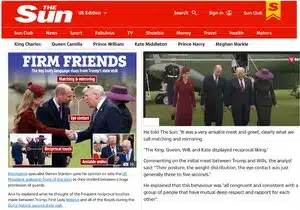
The coverage of Donald Trump’s state visit to the UK has been full of body language analysis. Smiles, leaning in, mirrored gestures — all signs of rapport. On the surface, it looked natural, even warm. But I’d bet good money that on the British side at least, hours of coaching went into making it look that way.
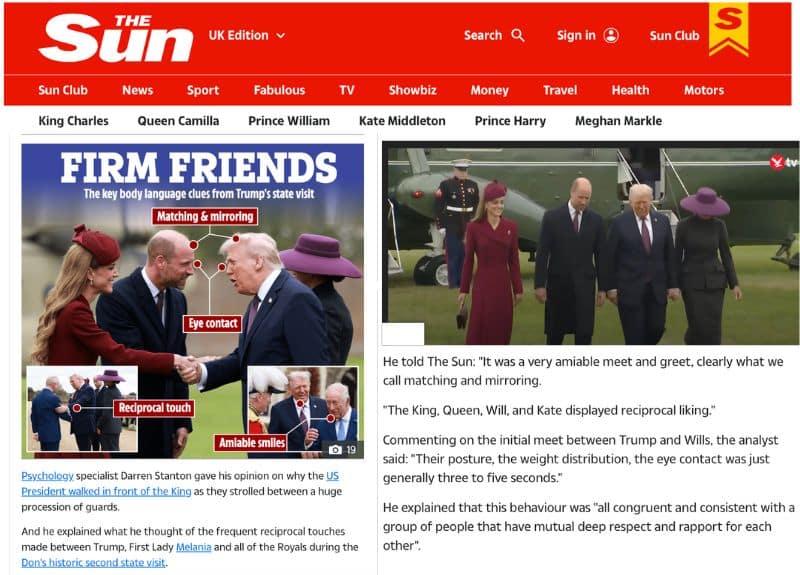
What those people will have studied is covered by the art of rapport-building and it isn’t just for state visits. It’s a skill that oils the engine of life — human interaction — helping everything run more smoothly.
A quick explainer
The word comes from the French rapporter, meaning to relate. By the 1920s, psychologists and counsellors were studying how to build it. By the 1960s–70s it was firmly part of the self-help world. Dale Carnegie’s How to Win Friends and Influence People (1936) doesn’t use the word much, but everything he wrote — listening, showing interest, warmth — is about rapport.
In the 1970s and 80s, NLP (Neuro-Linguistic Programming) made rapport a buzzword. It taught people to mirror posture, pace speech, match tone. Business and negotiation training soon followed. Getting to Yes (1981) from the Harvard Negotiation Project pushed “relationship before problem-solving” — another way of saying: build rapport first.
Fast forward to today, and these same ideas are everywhere — from politics to boardrooms. Which brings us back to our own world of media training.
Back to the day job
In our training, we use video to show people how they really come across. Most of us have unconscious habits that can be fixed once we spot them. With practice, anyone can sit with more presence, use their hands effectively, or lean in at the right moment.
The Royals and Cabinet are doing this at a different level. They often have to signal warmth and respect when they don’t feel it. That’s the job.
The takeaway
Body language isn’t something you either have or don’t. It’s a skill. We touch on it in both media and presentation training. Leaders are coached to look comfortable together. Spokespeople can be coached to appear open instead of defensive, cooperative instead of combative.
The lesson from the state visit is simple: body language is performance. And like any performance skill, it can be taught, practised, and improved.

Lindsay Williams is based in London but runs training sessions in multiple time zones, including the US, Europe, Africa and Asia, working online or travelling to host small and large scale training events. With 20 years of experience as a communications consultant with corporations and international organisations, Lindsay also runs Personal Impact Training and Pitching Via Zoom courses.
- A Behind-the-Scenes TV Cheat… and Why It Works - November 26, 2025
- What Should I Do With My Hands? - November 19, 2025
- A Jar of Marbles and the Power of a Simple Story - November 12, 2025


Leave a Reply
Want to join the discussion?Feel free to contribute!