
A Jar of Marbles and the Power of a Simple Story
The power of a well-told story or anecdote is one of the not-so-secret tools of leadership. Most people we train have heard this idea before — but few really know how to do it well. A short, well-crafted story can create a real wow in a presentation and be hugely effective in a media interview.
Last week, a clip of Brené Brown — research professor at the University of Houston and bestselling author of Dare to Lead — popped up on my YouTube feed. It’s a brilliant example of two things: a vivid, tangible metaphor and the power of a personal anecdote.
For those who haven’t clicked the video: when Brown’s nine-year-old daughter confided a secret to a friend, she soon discovered that it had been shared with the whole class. That led to a long, tearful conversation in which Brown came up with her “jar of marbles” metaphor — an explanation for how her daughter could work out who she could trust.
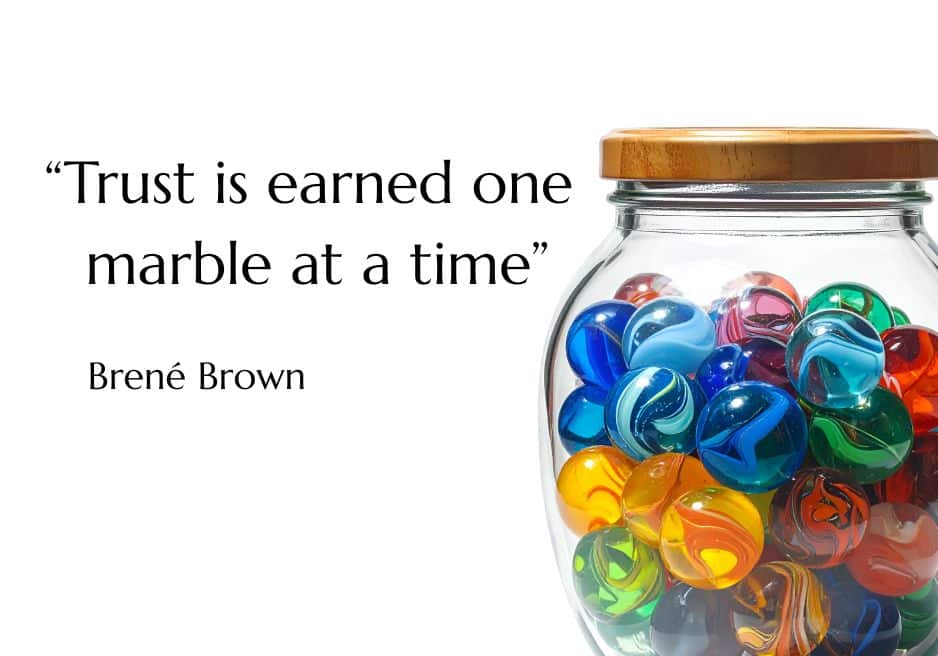
Every time someone shows kindness, keeps a secret, or proves dependable, they earn a marble. Every time they gossip, break a promise, or let you down, they lose one. Over time, you can see which friendships have jars full of marbles — and which don’t.
Later, Brown realised the same principle applies to leadership. Trust is built in small moments: a commitment kept, an honest conversation handled with care, a colleague defended in their absence. Each act adds a marble to the jar. Lose your temper, take credit unfairly, or withhold information — and a handful spill out. She now uses the jar of marbles to teach leaders how to build trust.
So, what can we learn from this?
Three takeaways for better communication
- Use metaphor to make ideas land
Metaphors turn abstract ideas into something people can see. Trust, culture, innovation — they all become clearer when given a physical shape. The jar of marbles works because it makes trust visible. Being able to use a metaphor isn’t an innate gift; it’s a skill. Professor Sir Jonathan Van-Tam, who became famous during the pandemic for his vivid briefings (the train arriving at the station, for example), once said he taught himself to use metaphors so people would understand science better. It’s something anyone can practise — and get good at. - Tell a story that brings it to life
A metaphor alone is clever. A metaphor inside a story is powerful. The moment Brown tells the story of her distraught, betrayed daughter, the idea becomes human.
When people share stories that are short, honest and real, listeners connect differently. It shows empathy, credibility and authenticity. - Land the message clearly
Don’t leave the audience guessing at the meaning of your story. For maximum impact, what used to be called the moral of the story should be clearly stated. In this case, it’s simple: Trust is earned one marble at a time. That phrase is short, visual and repeatable — exactly what you want when communicating an important truth.
At the Media Coach, we help leaders present more clearly and use language that is memorable and has impact. We do this through Media Training, Presentation Training, Personal Impact Training, Pitch Training and more. If you think we can help you or your team, get in touch on +44 (0)20 7099 2212 or email enquiries@themediacoach.co.uk

Lindsay Williams is based in London but runs training sessions in multiple time zones, including the US, Europe, Africa and Asia, working online or travelling to host small and large scale training events. With 20 years of experience as a communications consultant with corporations and international organisations, Lindsay also runs Personal Impact Training and Pitching Via Zoom courses.
- A Behind-the-Scenes TV Cheat… and Why It Works - November 26, 2025
- What Should I Do With My Hands? - November 19, 2025
- A Jar of Marbles and the Power of a Simple Story - November 12, 2025


Leave a Reply
Want to join the discussion?Feel free to contribute!