

What Should I Do With My Hands?
One of the most common questions we’re asked — whether in presentation training or on-camera coaching — is the deceptively simple: “What should I do with my hands?” The moment you start presenting, being interviewed, or recording a piece-to-camera, your hands can suddenly feel like a problem. Where do they go?
So, what should you do?
First: decide on a neutral position.

A neutral position
This is your safe home base — the place your hands can return to if you suddenly feel awkward. For some people, it’s hands lightly clasped at the waist. For others, it’s fingertips together or lightly holding a pen. Avoid behind your back, too firmly grasped or in your pockets. All can send the wrong signal.
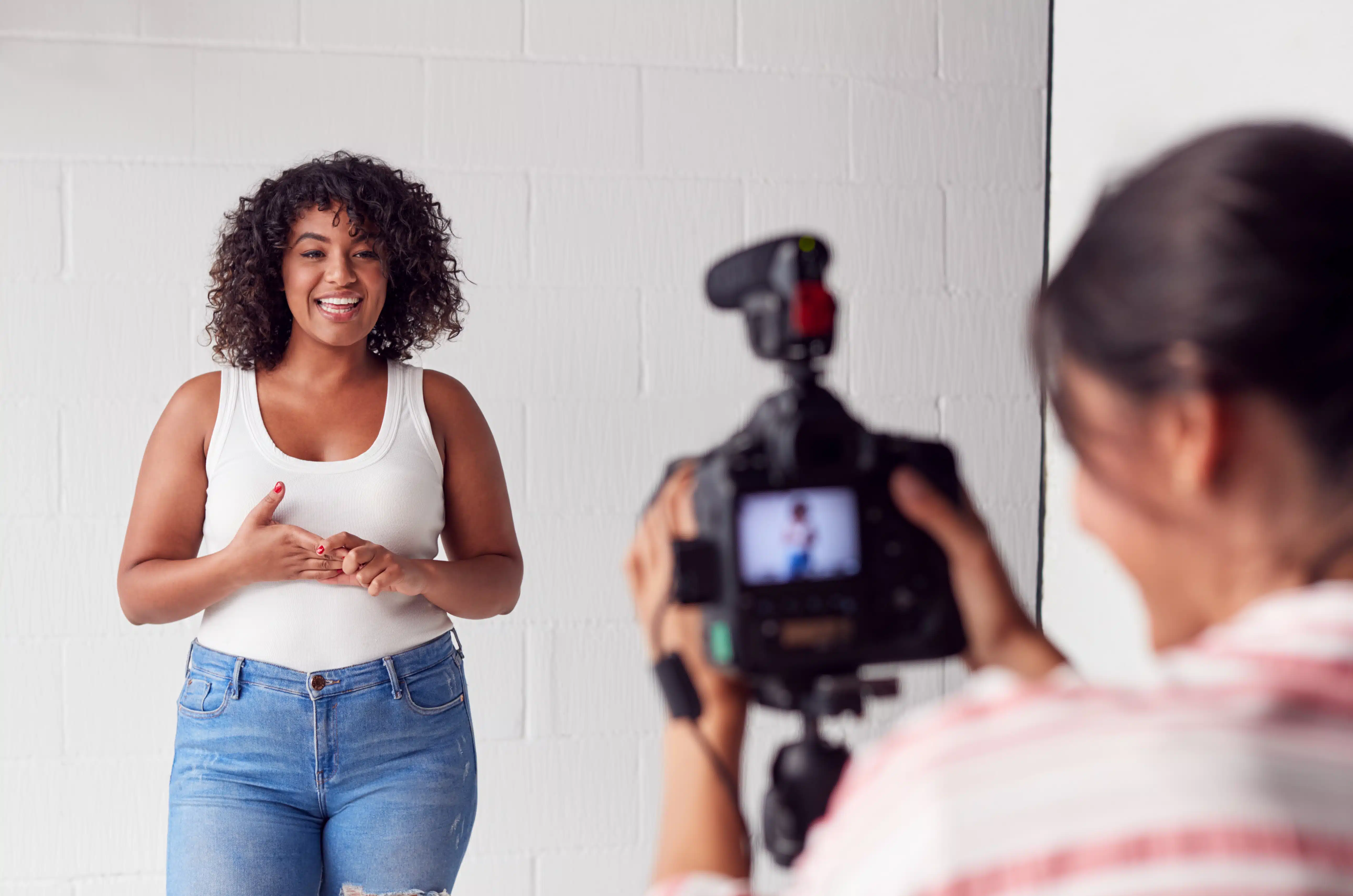
A neutral position can be anything that feels comfortable
Once you’ve chosen that neutral position, forget about your hands. Overthinking is the enemy here. If you suddenly realise they’ve drifted and you are uncomfortable, simply return to neutral. Otherwise, let them do what they naturally do.
Second: if you struggle to feel “presenter-like,” hold a pen in your dominant hand.

All inclusive gesture with pen
This is a favourite trick from our cameraman-trainer David Gridley. A non-clicking pen (please!) can instantly shift someone who’s overly self-conscious into their professional zone. Somehow it signals to the brain: I know what I’m doing. We’ve seen this transform performances. Try it.

Pointed gesture with pen — take care it doesn’t appear accusatory
Third: let movement serve meaning.
Good speakers don’t move randomly; they move intentionally. If you say, “In the US it’s like this… but in Europe it’s like this…”, you can take a small step to one side, then the other to illustrate the geographical gap. If you’re very confident — like our trainer Eric Dixon — you might even cross the stage to make the contrast clear. Eric also moves forward when he wants to create intimacy or confidentiality, and steps back with arms spread when he wants to illustrate the big picture or convey inclusivity. The point is, movement becomes part of the message: a visual aid, it is not random.
And finally: remember that human brains are pattern-spotters.
Your audience notices repetition. If you constantly scratch your nose, tug your ear, or fiddle with your glasses case, they’ll see it. These repetitive gestures are almost always self-soothing behaviours. Once the audience spots the pattern, it starts to irritate them — and they stop listening to what you’re saying. If you know you have one of these habits, work on removing it. Here’s a 45-second video that explains this further.
Images from iStock

Lindsay Williams is based in London but runs training sessions in multiple time zones, including the US, Europe, Africa and Asia, working online or travelling to host small and large scale training events. With 20 years of experience as a communications consultant with corporations and international organisations, Lindsay also runs Personal Impact Training and Pitching Via Zoom courses.
- A Behind-the-Scenes TV Cheat… and Why It Works - November 26, 2025
- What Should I Do With My Hands? - November 19, 2025
- A Jar of Marbles and the Power of a Simple Story - November 12, 2025


Leave a Reply
Want to join the discussion?Feel free to contribute!