
A Behind-the-Scenes TV Cheat… and Why It Works
At the end of last week, I caught a tiny “behind the scenes” moment on television that made me laugh out loud — and reminded me of the many small ways professionals quietly “cheat” on TV.
Right at the end of the cricket coverage, guest commentator Glenn McGrath turns to presenter Alex Hartley and asks, “Why are you so tall?” She laughs and replies, “Because I’m standing on a box!” We never see the box, but when she steps off it the reason becomes obvious: she’s a much shorter woman standing next to a very tall man, and as she puts it, “we wouldn’t be able to do this interview” without it.
My trusty red box solved the problem instantly and usually made everyone laugh in the process. In fact, I discovered it was an excellent icebreaker with nervous interviewees. Clearly, I’m not the only one:
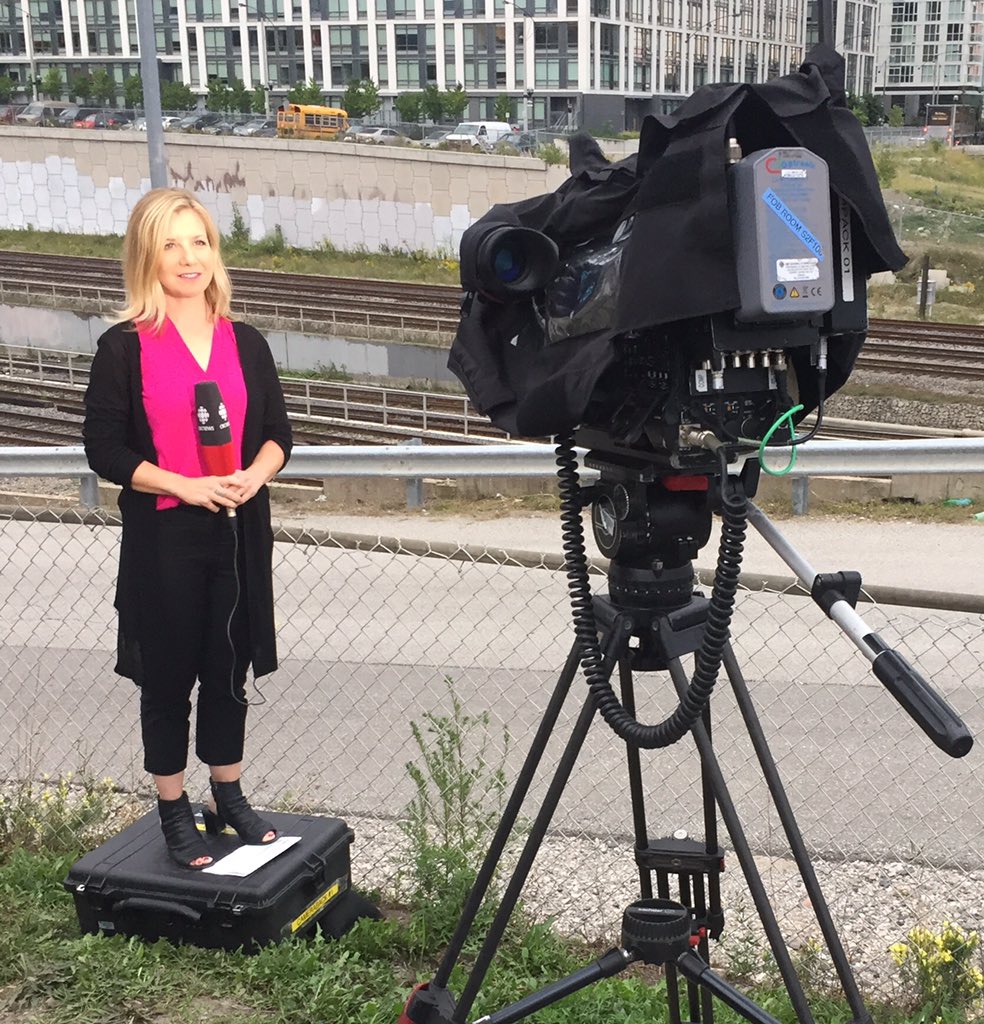
Lorenda Reddekopp is a CBC reporter who sometimes stands on a box.
‘Eyeline’ is one of those small technical details that makes a surprisingly big difference in telly. It simply refers to the line of sight between two people, or a speaker and the camera. Get it wrong on camera and the whole piece feels subtly skewed: too much chin, too much nostril, or an unintended sense of power imbalance if one person visually dominates the frame. Get it right and everything feels natural — the viewer concentrates on the conversation rather than the optics.
For anyone who appears on camera — whether in a studio, on Zoom, or on a smartphone — it’s worth thinking about your eyeline. Make sure you’re level with the people you’re speaking to. Prop your laptop up. Adjust your seat height. Shift a few inches to one side if it helps the balance of the shot.
When the eyeline is right, the conversation works. And when it’s wrong, the viewer notices — even if they can’t quite tell you why.
Image from X (formerly Twitter).

Lindsay Williams is based in London but runs training sessions in multiple time zones, including the US, Europe, Africa and Asia, working online or travelling to host small and large scale training events. With 20 years of experience as a communications consultant with corporations and international organisations, Lindsay also runs Personal Impact Training and Pitching Via Zoom courses.
- A Behind-the-Scenes TV Cheat… and Why It Works - November 26, 2025
- What Should I Do With My Hands? - November 19, 2025
- A Jar of Marbles and the Power of a Simple Story - November 12, 2025


Leave a Reply
Want to join the discussion?Feel free to contribute!