

How to Handle Nerves for Media Interviews or Presentations
At The Media Coach, we often meet leaders who are brilliant in their day-to-day work but feel a wave of dread when the camera switches on or they step up to a podium. It’s completely normal—almost everyone gets nervous before a media interview or presentation. The trick isn’t to banish nerves altogether but to manage them so they help you perform at your best. In this blog, I outline some strategies we know can work.
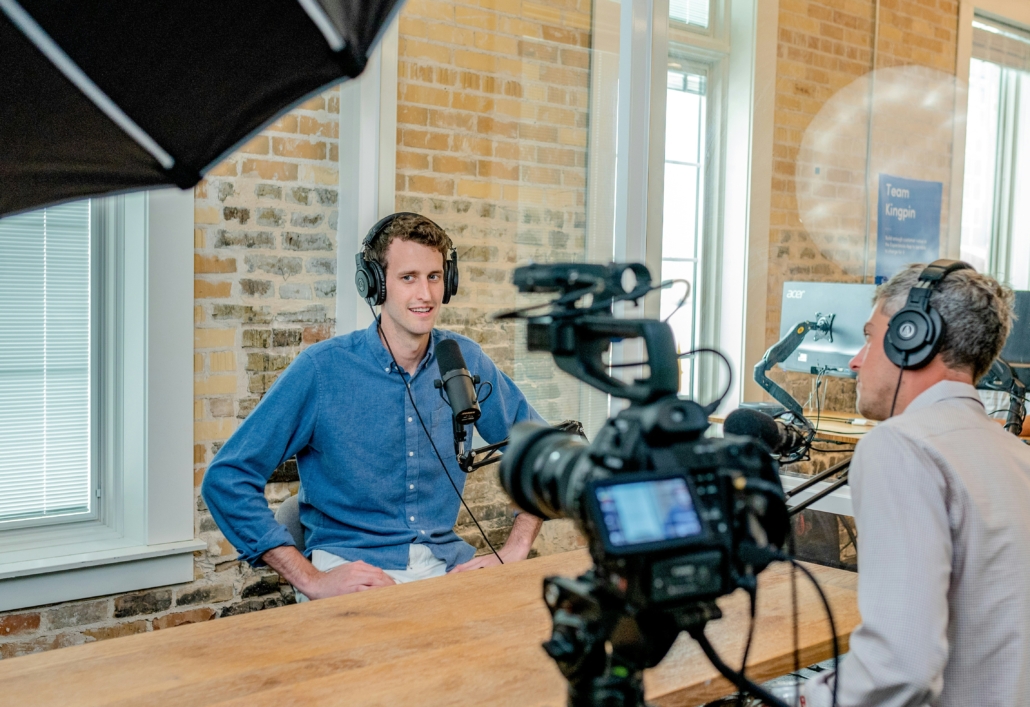
Reframe the Feeling
Nerves and excitement feel almost identical in the body—your heart beats faster, your breathing quickens, your palms might sweat. Instead of telling yourself “I’m terrified,” try saying, “I’m excited” or “I’m ready.” This simple reframing can trick your brain into associating the physical signs with positive energy rather than fear. Top athletes and performers use this technique before stepping into high-pressure situations.
Preparation Can Reduce Nerves (for some)
Some people fight nerves with preparation, others can choose to avoid preparing because it just increases anxiety. This is risky and almost guaranteed to lead to a weaker performance. What helps is having:
- Clear key messages (no more than three main points you must land).
- A practised narrative, so you know not just what you want to say but how you are going to say it.
- Examples or short stories to bring those points to life.
- Bridging phrases ready to help you steer back to your key points if you’re interrupted or side-tracked.
- A clear idea of timing, there are huge benefits to rehearsing with a stopwatch or timer.
Think of this as packing your mental “go-bag.” If you know what’s in it, you won’t panic when the unexpected happens.
Practise Aloud, Not Just in Your Head
Reading your notes silently gives a false sense of security. The only way to build confidence is to practise aloud. Say your key messages standing up, as if you’re on camera. Record yourself on your phone and play it back—you’ll instantly hear where you rush, mumble, or overcomplicate. Each run-through reduces the unknown and makes the real event feel familiar.
Control Your Breathing
Nerves make us breathe shallowly, which fuels anxiety. A quick reset is to breathe in for a count of four, hold for four, and breathe out slowly for a count of six. Do this three or four times before you go on air or on stage. Slowing the out-breath calms your nervous system and steadies your voice. Similar breathing techniques are used by both the US Navy Seals and the SAS. If you need the science behind that, it’s here.
Manage Your Body
Simple physical tricks can counteract tension:
- Plant your feet firmly on the ground for stability.
- Remember BBC: If sitting, put your bottom in the back of the chair. Lean forward slightly to project energy.
- Relax your shoulders and let them drop slightly.
- Let your hands move —don’t clamp them to your sides or fidget.
- Unclench your jaw; tension here makes it harder to speak clearly. (Speech therapists often teach exercises for this.)
The audience wants you to do well. Confident body language helps them trust you—and helps you trust yourself.
Control the Start
The most nerve-wracking moment is usually the first 30 seconds. Plan your opening line or first answer so you’re not improvising when adrenaline is highest. Once you’re underway, nerves tend to settle.
Focus Outward, Not Inward

Nerves make us turn inwards: “How do I look? Am I making sense? What if I go blank?” A useful shift is to focus outward: “What does this audience need? What will help them understand?” By putting attention on the listener rather than yourself, you take pressure off and come across as more engaging. This is a technique advocated by the Dalai Lama no less.
Accept Imperfection
At The Media Coach, we’ve seen again and again that once people get a few tools and do some practise, the fear shrinks, and the confidence grows. If you or your team would like to rehearse in a safe space and learn to manage nerves under pressure, get in touch—we’d be delighted to help.
Photo credits
Photo by Austin Distel on Unsplash
Dalai Lama photographed by Christopher Michel. Licensed under Creative Commons Attribution 2.0 (CC BY 2.0)

Lindsay Williams is based in London but runs training sessions in multiple time zones, including the US, Europe, Africa and Asia, working online or travelling to host small and large scale training events. With 20 years of experience as a communications consultant with corporations and international organisations, Lindsay also runs Personal Impact Training and Pitching Via Zoom courses.
- A Behind-the-Scenes TV Cheat… and Why It Works - November 26, 2025
- What Should I Do With My Hands? - November 19, 2025
- A Jar of Marbles and the Power of a Simple Story - November 12, 2025


Leave a Reply
Want to join the discussion?Feel free to contribute!